Rob Bell is the founding Pastor of Mars Hill Bible Church and author of a new book called "Love Wins". Watch this interview on America's MSNBC to get an idea of the controversy.
I think I'll have to read the book and make a more detailed response.
For a lengthy but detailed early review see this one by Kevin DeYoung on the Gospel Coalition Website.
BTW - I wish he had answered the initial question about Japan better!
***
Wednesday, March 16, 2011


Friday, January 28, 2011
Middle Eastern Christians in Australia looking for support as the Left fail to stand up to Muslim Aggression

The number of Middle-Eastern Christians in Australia is less than the number of Muslims, but is comparable. This could become a significant voting block if Labour continues in the direction it is going.
The question to ponder is whether other Christians in Australia will see this as an important political issue - and add their voice to that of their Coptic, Macedonian and Assyrian brothers and sisters - I hope they do.
Certainly it seems odd to me that we are accepting significant numbers of Muslim 'refugees' from the Middle-East, when the Christian minorities are the ones being persecuted and are fleeing their countries by the hundreds of thousands.
Friday, January 21, 2011
Expositions For Expositors by John Woodhouse

EPE #1 - 1 Timothy 1:1-2 from Audio Advice on Vimeo.
Thanks to the folk at Audio advice. (Check out the Vimeo page here).
Friday, December 31, 2010
Bible Reading Plans for the New Year
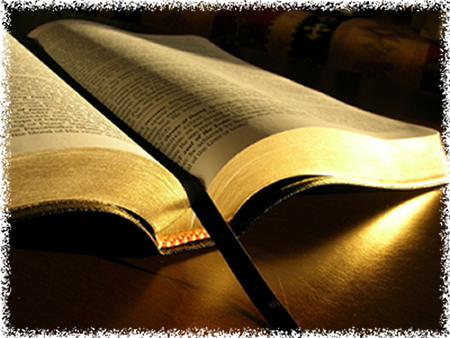
While Christians know that we can make a fresh start with God anytime, the start of a new year can be a good opportunity to change some of the patterns of life and make the changes that we haven’t felt able to make in the business of the year. I suggested in a recent sermon that two of the habits and patterns we might seek to establish or re-establish for the new year might be our quiet times and our Bible reading programme. Often these two can (and should) be linked.
One of the challenges of establishing a regular Bible reading plan is working out the plan. I find that it helps to use a plan that someone else has put some time and effort into devising. I recently came across a collection of these gathered by Justin Taylor here: http://thegospelcoalition.org/blogs/justintaylor/2009/12/30/bible-reading-plans-2/
Another recent article with a revised Bible reading plan is found here:
http://thegospelcoalition.org/blogs/tgc/2010/12/29/two-year-bible-reading-plan/
In particular I recommend the plan I am using this year. It was originally devised by Robert Murray M’Cheyne in 1842. If you read all four readings for each day you read the whole Bible in a year. It can easily be modified so that you read the whole Bible in two years (just read two readings each day). The plan is reprinted in a book by Don Carson, For the Love of God (Vols 1 and 2) which gives a short reflection for each day on one of the readings. Carson’s introduction, which includes a copy of the plan, can be found here: Carson’s Introduction - For the Love of God
Take the plunge and get into a Bible reading plan this year. I pray that God will bless you richly as you listen to his word.
PS. For a nice online version of the M'Cheyne plan, with links to Biblegateway, check out this page created by Karen & Ben Beilharz. http://hippocampusextensions.com/mcheyneplan/
Wednesday, December 15, 2010
A Locust Plague and an Ancient Prophecy

According to the Australian Plague locust Commission the peak time for hatching in New South Wales has been October-November, with plague swarms moving across the state and moving to egg-laying in December. Apparently the conditions that produced potentially the best crops in more than a decade (now significantly damaged by floods) are ideal for locusts.
Hearing about the Australian locust situation made me think of the Old Testament book of Joel, which recounts the invasion of Israel / Judah by locusts and the people's response to the consequent warnings from God passed on by the prophet.
The book of Joel is interesting because scholars have long had difficulty determining the date it was made – unlike most OT prophets there is no dating information based on the reining kings or historical events. The locust plagues Joel speaks of could have occurred at almost any date in the history of Israel – from the time of King Solomon to the time after the exile.
Nevertheless, Joel speaks powerfully on a number of topics, including the need to cry out to God in the face of calamity; the need for heart-felt repentance for those who have sinned; the need for communities to repent together and rejoice together when they are delivered. He also pushes us to understand the Biblical meaning of 'The Day of the Lord' and gives the definitive OT prophecy of the outpouring of the Spirit in the 'last days' (quoted by Peter at Pentecost in Acts 2).
The final chapter of the prophecy paints the picture of the end time judgment in the 'Valley of Decision' (Jehoshaphat) on what will be the great and terrible 'Day of the Lord'. Yet the prophecy does not simply end with judgment but points to the fountain that will flow from the house of the Lord. This is picked up in the NT in Revelation 22:1-2 where John sees: 'the river of the water of life, as clear as crystal, flowing from the throne of God and of the Lamb down the middle of the great street of the city.' We also ought to remember the words of Jesus (in John 7:37ff), who said: 'If anyone is thirsty, let him come to me and drink. Whoever believes in me, as the Scripture has said, streams of living water will flow from within him.'
I am not suggesting that reports of a huge locust plague ought to have us jumping to conclusions about the end of the world being nigh – although some so-called 'end times experts' might want to interpret them this way! In fact, Joel's prophecy teaches us to understand every calamity - such as a locust plague, or a Tsunami or even a financial crash – as a kind of mini 'Day of the Lord' – something that ought to warn us to turn back to God and be ready, for the great 'Day of the Lord' is coming. The NT also calls it the day of the Lord Jesus Christ, who will return on that day as the judge of the earth. However that day will come 'like a thief in the night' at a time we cannot predict. (Check out 1 Thessalonians 5:2; 2 Peter 3:10.)
The prophecy of Joel reminds us that the 'Day of Decision' is coming – when the world will face judgment. Yet those who have turned to the Lord will escape condemnation on that Day. We have also received the blessing of God's spirit poured out on us and since we live in the day of Salvation, can be part of that blessing flow out to the whole world.
If you would like to check out my sermons on Joel, they are available at our church website: www.padstowanglican.org.au/sermons.
1. Joel 1:1-20 'Cry to God'
2. Joel 2:1-17 'Return to God'
3. Joel 2:18-32 'Rejoicing in God'
Saturday, November 13, 2010
PRAY FOR THE PERSECUTED

Remember those in prison as if you were their fellow prisoners, and those who are mistreated as if you yourselves were suffering.
This Sunday (November 14th) has been billed as the International Day of Prayer for the Persecuted Church.
Whether you spend this Sunday as a special time of prayer or find some other time, I believe it is important to be informed and to pray (regularly) for our brothers and sisters who are persecuted.
As if on cue, this article appeared in yesterday's Sydney Morning Herald, telling the story of Pakistani woman Asia Bibi (Pictured above), who has been convicted of Blasphemy and sentenced to death.
There are too many similar stories in various parts of the world. Helpful websites to find out more about persecution around the world are:
http://www.persecution.org/ International Christian Concern
http://www.persecution.com/ Voice of the Martyrs
http://www.persecution.com.au/ VOM Aust
Thursday, November 11, 2010
Fun and Safe Social Networking for Kids

There are of course precautions we can take when kids are younger, including filtering or blocking software, physical location of computers (in the family room, not the bedroom) and parental supervision. But where do we allow them to go online when they want to start using social networking.
In our house the teenagers use 'facebook'. We rely on their maturity and good judgement - but their parents are also among their FB 'friends'. The pre-teenagers are more likely to be interested in Club Penguin, where each person has a penguin avatar that can interact (to a limited extent) with others. They especially like the races against other penguins (that earn them points).
But what if you want something in between? This review by Sarah Kessler of five 'fun and safe social networks for children' on mashable could be the answer. For the record the five are:
1. TogethervilleWhile none of these will be perfectly safe, there will probably be something here you will find acceptable. Just remember to keep talking with your kids about what they enjoy (or dislike) about the site.
2. What's What
3. Scuttlepad
4. Giant Hello
5. Skid-e Kids
Thursday, November 4, 2010
A Christian Response to Global Warming

I have to say that the first topic was much easier to tackle - mainly because the Bible has more to say about the topic. But how to tackle the topic of 'Global Warming' (GW)?
I began by doing some research on the scientific views on GW. With some background in science (B Sc in 1986!) I was confident I could get a handle on the issues. What I discovered is that it is not as straightforward as I had thought!
If we accept the argument of Al Gore and friends (from the movie 'An Inconvenient Truth') then an increase in pollution caused by human activity has led to an increase in greenhouse gases - especially Carbon Dioxide. This has led to an increase in the average temperature of the earth by about 0.6 - 0.8 degrees C in the last 40-50 years, or about 1.5 degrees over the last 100 years. The concern is that this increase in temperatures is already having significant negative effects, and that if it continues we could see an increase in the world's temperature of 4-5 degrees in the next 50 years - with catastrophic consequences. (A Short Video by national geographic explaining Global Warming can be found here: Global Warming 101.)
Al Gore claims that the scientific facts are not disputed - which is only partly true. The fact of global warming - the rise in the average temperature of the earth - is generally not disputed. What is disputed more is the cause. More specifically, whether humans are the main cause. There actually seem to be quite a few scientists who have alternative explanations (see for example the arguments of Bob Carter, an Australian from Townsville who does not deny the facts, but the conclusions drawn. His new book is called Climate: The Counter Consenus). The 'international consensus' on human induced global warming is presented here (Australian Government Dept of Climate Change) and here (Inter-Governmental Panel on Climate Change).
In a short period of time I went from being fairly convinced for Human-caused global warming to very sceptical, and then back to cautiously accepting.
Another side of the issue is to consder the political organisations that are pushing the for an integrated international solution - which generally involves heavy taxing of carbon emissions. Led by the beauracracy of the UN, it is strongly supported by many socialist organisations around the world who are keen to see this as a way to redistribute the world's wealth. At this point we can get into any number of conspiracy theories - many of which I consider crazy! However, there is at least a grain of truth coming from those who warn against handing over power to an unaccountable world-wide beauracracy.
Taking all this into account, I then tried to consider the Christian response. I decided that perhaps the most important passages are in Genesis 1 and 2 which remind us that God is creator of our world and he has given us an authority over the creation - not an authority to exploit, but rather an authority that involves caring for his creation. Very important is to remember that we are to worship the creator, not the creation, and that in whatever we do we are to see to love both God and our neighbour.
So, I asked, how should we love our neighbour who is possibly affected by Global Warming? I think the answer is that we as individual and as societies ought to take 'reasonable means' to lessen our impact on the creation. Having said that, I am sure that there are more significant issues of exploitation (of people as well as the environment) and pollution that ought to be addressed as a priority over 'carbon emission'. Nonetheless, I believe that in this we ought to err on the side of caution and begin to implement measures that will reduce our the amount of carbon dioxide in the atmosphere.
Here is the outline of my talk:
Subscribe to:
Posts (Atom)